Eye-Movement Reinstatement
Studying eye-movement patterns as a window into memory recall
Overview
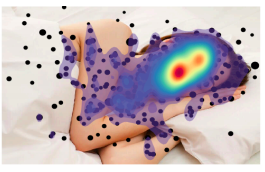
Eye movements during recall often retrace the spatial layout of the original experience—a phenomenon called eye-movement reinstatement. We study how these gaze patterns relate to the quality of memory retrieval and how they interact with neural reactivation measured by fMRI.
Key Questions
- Do the eyes “replay” the spatial structure of a remembered scene?
- Does fixation reinstatement support memory in older adults?
- How do eye-movement reinstatement and neural reactivation co-occur during mental imagery?
Selected Publications
- Wynn, J. S., Ryan, J. D., & Buchsbaum, B. R. (2020). Eye movements support behavioral pattern completion. Proceedings of the National Academy of Sciences. doi:10.1073/pnas.1917586117
- Bone, M. B., St-Laurent, M., Dang, C., McQuiggan, D. A., Ryan, J. D., & Buchsbaum, B. R. (2019). Eye movement reinstatement and neural reactivation during mental imagery. Cerebral Cortex. doi:10.1093/cercor/bhy014
- Wynn, J. S., Olsen, R. K., Binns, M. A., Buchsbaum, B. R., & Ryan, J. D. (2018). Fixation reinstatement supports visuospatial memory in older adults. Journal of Experimental Psychology: Human Perception and Performance. doi:10.1037/xhp0000522
- Wynn, J. S., Bone, M. B., Dragan, M. C., Hoffman, K. L., Buchsbaum, B. R., & Ryan, J. D. (2016). Selective scanpath repetition during memory-guided visual search. Visual Cognition. doi:10.1080/13506285.2016.1175531
Code
- eyesim — R package for eye-movement similarity analysis