Memory Reactivation
Using fMRI pattern analysis to study the recall of complex memories
Overview
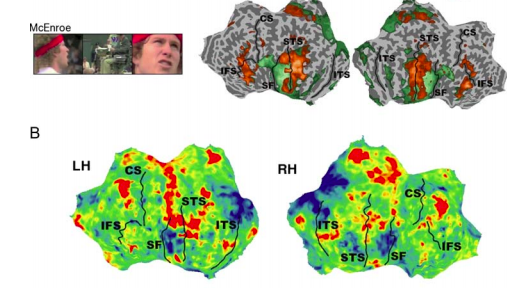
How does the brain bring back a complex memory? When we recall a vivid experience, patterns of neural activity that were present during the original event are partially reinstated—a phenomenon known as neural reactivation. Our work uses multivariate fMRI pattern analysis to decode and quantify the content of reactivated memories.
Key Questions
- How faithfully does the brain reinstate the original encoding pattern during recall?
- What determines whether a memory is recalled vividly or only weakly?
- How does reactivation change with healthy aging?
Selected Publications
- Bone, M. B., & Buchsbaum, B. R. (2021). Detailed episodic memory depends on concurrent reactivation of basic visual features within the posterior hippocampus and early visual cortex. Cerebral Cortex Communications. doi:10.1093/texcom/tgab045
- Bone, M. B., Ahmad, F. N., & Buchsbaum, B. R. (2020). Feature-specific neural reactivation during episodic memory. Nature Communications. doi:10.1038/s41467-020-15763-2
- Robin, J., Buchsbaum, B. R., & Moscovitch, M. (2018). The primacy of spatial context in the neural representation of events. Journal of Neuroscience. doi:10.1523/JNEUROSCI.1638-17.2018
- St-Laurent, M., Abdi, H., & Buchsbaum, B. R. (2015). Distributed patterns of reactivation predict vividness of recollection. Journal of Cognitive Neuroscience. doi:10.1162/jocn_a_00839
- St-Laurent, M., Abdi, H., Bondad, A., & Buchsbaum, B. R. (2014). Memory reactivation in healthy aging: Evidence of stimulus-specific dedifferentiation. Journal of Neuroscience. doi:10.1523/JNEUROSCI.3054-13.2014
- Buchsbaum, B. R., Lemire-Rodger, S., Fang, C., & Abdi, H. (2012). The neural basis of vivid memory is patterned on perception. Journal of Cognitive Neuroscience. doi:10.1162/jocn_a_00253
Code
- rMVPA — R package for multivariate pattern analysis of fMRI data